
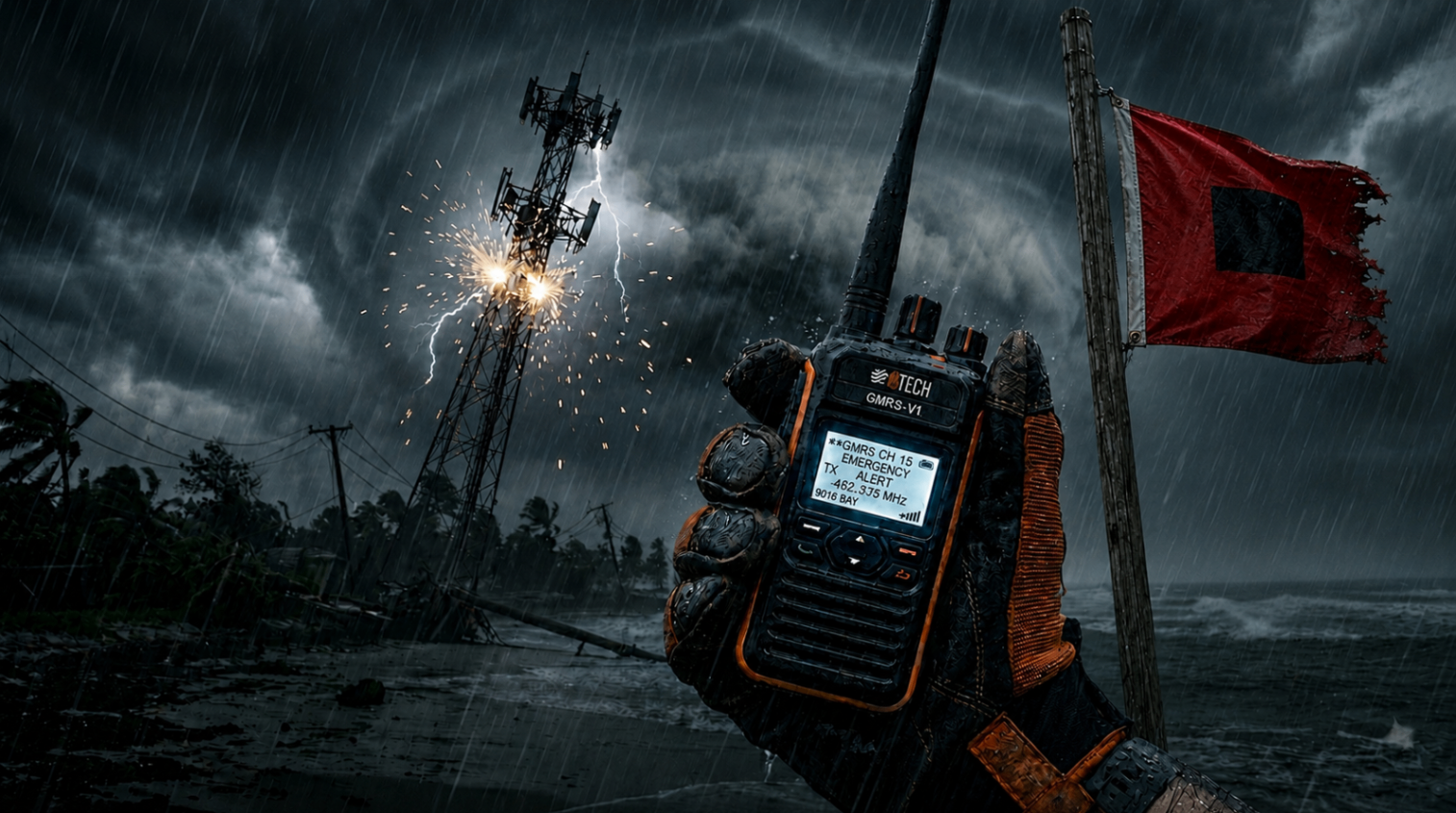
With summer’s arrival comes more than just backyard barbecues and beach trips—it marks the official start of Hurricane Season. For most, when the sky turns a bruised purple and that piercing “Emergency Alert” tone screams from every device, panic sets in.
But for the prepared GMRS user, that tone is a signal to get to work. While the average person watches their cell signal bars vanish or face “Network Congested” errors, the radio operator is already tuning into the local repeater and checking the nets. When the towers go down, your radio isn’t just a hobby; it’s your lifeline.
Whether you are a seasoned operator or just got your FCC license, being ready for a major storm requires more than just having a radio in a drawer. Here is how to prep your comms, your gear, and your family before the next big storm system rolls through.
Hardened Comms: Why Your Hardware Matters in a Hurricane
If you’re serious about this, put away the cheap “20-mile range” blister pack radios you bought at a big-box store. In a hurricane, you need IP67-rated waterproof gear and enough power to hit a repeater from inside a storm-battered house. Most consumer-grade walkie-talkies (FRS) are fine for a sunny day at the park, but they lack the power and the weather-sealing required when horizontal rain is hitting your windows.
This is where GMRS shines. Unlike FRS radios, GMRS allows for higher wattage and the use of repeaters—external stations that listen for your signal and re-broadcast it at a much higher elevation and power. In a disaster, a repeater can be the difference between talking to your neighbor and talking to a search-and-rescue net 30 miles away.
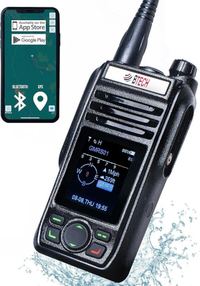
When it comes to a “do-it-all” emergency handheld, the BTECH GMRS-PRO stands in a league of its own. It isn’t just a radio; it’s a ruggedized communication hub designed for exactly the kind of chaos a hurricane brings.
- Truly Waterproof: With an IP67 rating, this radio can be submerged in up to a meter of water for 30 minutes. If you have to step outside in a downpour to clear a drain or check on a neighbor, you don’t have to worry about your lifeline shorting out.
- Off-Grid Texting & GPS: This is the game-changer. Through the GMRS-PRO app, you can send text messages and share your GPS coordinates over GMRS frequencies. If cell towers are down and you need to tell your family exactly where you are, you can send your location data directly to another GMRS-PRO user—no cell service or Wi-Fi required.
- The Info You Need: It features dedicated NOAA Weather Channels with alerts that will wake you up if a tornado warning is issued, plus an FM radio to keep tabs on local news broadcasts.
- Modern Power: It charges via USB-C, making it easy to top off using a solar panel or a portable power bank once the grid goes dark.
In a hurricane, your equipment is either an asset or a liability. Having a radio like the GMRS-PRO ensures that when the wind starts howling, you aren’t just hearing static—you’re staying connected.
Pro Tip: Remember that while GMRS-PRO units can talk to any FRS/GMRS radio, the advanced features like texting and location sharing require both parties to have a GMRS-PRO. It’s worth outfitting your “emergency buddy” or family with a matching unit.


Hurricane-Proofing Your Antenna: Securing Against the Wind and Lightning
A 50mph gust can turn a beautiful 6dB gain base antenna into a jagged projectile in seconds. Beyond the wind, hurricanes are massive “static generators.” As dry air friction increases and lightning strikes nearby, your antenna acts like a giant straw for electricity, sucking high-voltage surges directly into your expensive radio equipment.
If you have a permanent outdoor setup, you have two choices: Secure it or Pull it. If you are planning on riding out the storm at home, making the right choice now is essential to protecting your communication plan.
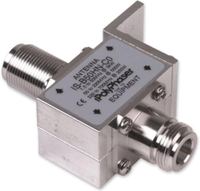
The Ultimate Defense: The PolyPhaser Lightning Arrestor For serious operators, “cheap” isn’t an option when it comes to surge protection. While many entry-level protectors are great for your home antenna, the gold standard used by Ham and repeater sites is the PolyPhaser B50LN Lightning Arrestor.
Unlike standard fuses, PolyPhaser’s patented spiral inductor technology is designed to handle multiple strikes and divert massive surges away from your radio or repeater and into the ground. It is an “inline” protector that you install between your antenna and your radio. If you are serious about protecting a high-end base station or a community repeater, this is the industrial-grade insurance policy you need.
Hardening Your Home Based Station For the average home setup, there are 4 key strategies that can help protect your equipment.
- The “Attic” Backup: If you live in a high-risk zone, consider mounting a secondary J-pole or slim-jim antenna in your attic. You’ll lose some range through the shingles, but you won’t lose the antenna when the roof starts rattling and the wind hits triple digits.
- Guy Wires: If your mast is staying up, use non-conductive, UV-rated paracord or specialized guy wires to stabilize it. Metal wires can interfere with your signal pattern, so stick to high-strength synthetics.
- The “Air Gap”: If the storm is directly overhead, the only 100% effective protection is the “Air Gap.” Physically disconnect your coax from the radio and move the cable end away from your gear. A lightning strike can jump a small fuse, but it has a much harder time jumping a wide gap of air.
- SWR Monitoring: Keep an SWR meter in your kit. Water ingress in your coax connectors can cause your Standing Wave Ratio (SWR) to spike. If you see your SWR climb above 2.0:1, shut it down immediately; you likely have a leak, and continuing to transmit could fry your radio’s power amplifier.
Pro Tip: Properly ground your Lightning Arrestor to an 8-foot copper rod driven into the earth. An arrestor is only as good as the path to ground you provide for it. Use heavy-gauge copper wire to ensure that energy has somewhere to go other than your living room.
Purchase Guide
PolyPhaser Lightning Arrestor
Coax Surge Protector
Beyond the Battery: Sustainable Power for Long-Term Outages
Power is the heartbeat in any emergency plan. In a major hurricane, the power grid isn’t just “flickering”—it’s often physically destroyed. While gasoline backup generators are the most effective way to keep a whole home running, the high setup costs and maintenance can be a barrier for many. Furthermore, if you are forced to evacuate, a heavy generator isn’t coming with you.
To keep your GMRS radios, cell phones, and emergency lights running, you need a solution that is portable, silent, and renewable. This is where modern portable power stations (often called “Solar Generators”) have changed the game for radio operators.
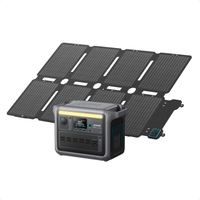
If you want a professional-grade power solution that you can grab and go, the Anker SOLIX C1000 is a top-tier choice for the serious prepper.
- Ultra-Fast Recharging: Time is of the essence between bands of rain. The SOLIX C1000 can charge to 100% in under an hour from an AC outlet before the storm hits, or you can pair it with solar panels to juice up once the clouds clear.
- LiFePO4 Longevity: Unlike older lithium batteries, the LiFePO4 chemistry in this unit is rated for 3,000+ cycles. That means it can sit in your “go-bag” closet for years and still be ready to perform when you need it.
- Power for Everything: With 1800W of output, it doesn’t just charge your GMRS handhelds; it can run a full-size base station, your internet router, or even a small coffee maker to keep morale high while you monitor the nets.
- App Monitoring: Since it has built-in Bluetooth and Wi-Fi, you can monitor your power usage and battery levels from your phone—matching perfectly with the tech-forward setup of a GMRS-PRO user.
True Off-Grid Sustainability For extended power grid failures that last weeks rather than days, “stored” power isn’t enough—you need to be able to generate it. Pairing a power station with foldable solar panels allows you to harness the “calm after the storm.”
When the sky clears, you can deploy your panels in the yard or on a balcony to recharge your station. This ensures that even if the local utility company is weeks away from fixing the lines, your GMRS “Lifeline” stays active and your family stays connected.
Battery Management Tip: Always keep your power banks at roughly 80% charge during the off-season. When a tropical depression is first named, top them off to 100%. This maximizes battery health while ensuring you aren’t caught at 0% when the alerts start.
Purchase Guide
Anker SOLIX C1000 Solar Kit
1800W Solar Generator & 100W Solar Panels
Family First: Establishing Your GMRS Emergency Protocols
Having the best radio gear in the world won’t help if your family doesn’t know which channel to use or when to check in. When a hurricane hits, the stress levels are high. Clear communication is the only way to cut through the noise.
A GMRS-focused family plan ensures that everyone, from the kids to the grandparents, knows exactly how to reach home base without relying on a cell signal.
1. Establish Your “Primary” and “Tactical” Channels. Don’t wait for the storm to pick a frequency
- Primary Channel: Pick a standard GMRS channel (1–22) for general family check-ins.
- Tactical/Repeater Channel: If you have access to a local repeater, make sure everyone has the correct CTCSS/DCS tones programmed into their radios. In a hurricane, a repeater might be the only way to talk over the wind and distance.
- The “Fall-Back”: If the repeater goes offline (which happens if they lose power or their antenna falls), have a pre-arranged simplex channel (radio-to-radio) to switch to immediately.
Pro-Tip: Don’t rely on your family’s memory or a phone that might die. Print and laminate your frequency list for each family member. Include the local GMRS repeaters, NOAA Weather channels, and local emergency services.
2. The “Top of the Hour” Rule
During a power outage or evacuation, you need to conserve battery. Instead of leaving radios on 24/7, establish a check-in window. For example: “If we are separated, everyone turns their radio on at the top of every hour for 10 minutes.” This keeps the lines open for essential updates while ensuring your handhelds last for days instead of hours.
3. Use the “GMRS Advantage” (The One-License Rule)
Remind your family that your GMRS license covers your entire immediate family. This is the perfect time to explain that everyone is legal to transmit. Make sure each family member has their own handheld, remembers the shared callsign, and knows the basics:
Pro-Tip: Use a label maker to add your callsign on each family member’s radio.
4. Create a “PACE” Plan
A PACE plan is a military standard that works perfectly for emergency comms. Write this down and tape it to the back of every radio:
- P - Primary: GMRS Repeater (Channel 20, Tone 141.3).
- A - Alternate: GMRS Simplex (Channel 15, No Tone).
- C - Contingency: Texting via GMRS-PRO app (if using data-capable radios).
- E - Emergency: Cell phone (if bars are available) or signaling via whistle/light.
5. Practice “Radio Silence”
Teach your family that during an emergency, the airwaves will be busy. Keep transmissions short, concise, and professional. “Emergency traffic only” should be the rule once the storm reaches its peak
The Evacuation Essentials: Packing for the Unknown
Should the worst happen and your family needs to evacuate, the window to leave is often smaller than you think. You won’t have time to hunt for charging cables or look up frequency tones. Each family member needs a personal “Go Bag” pre-packed with survival essentials—food, water, medicine, and a first aid kit—but for the GMRS operator, that bag also needs to serve as a mobile comms center.
We all know electricity and water do not mix, and in a hurricane evacuation, you are guaranteed to encounter both. A high-quality waterproof dry bag is essential to protect your electronics.
The “One Color per Person” Strategy
When choosing bags, look for brands that offer a variety of bright, high-visibility colors. Assigning a specific color to each family member (e.g., Mom is Orange, Son is Neon Green) allows you to identify whose gear is whose at a glance in a crowded shelter or a dark vehicle. Bright colors also make the bags easier to spot if they are dropped in debris or murky water.
Essential Gear Checklist
Your radio kit should be modular and tucked into a waterproof sleeve within your bag. Don’t leave home without these five GMRS essentials:
- Spare Batteries & USB-C Cables: One battery is never enough. Pack at least one fully charged spare for every radio. If your radios support USB-C charging (like the GMRS-PRO), ensure you have the specific cables tucked away.
- The “Laminated” Frequency Card: In a high-stress situation, your brain will forget the simplest things. Keep a small, laminated card in every bag that lists your family’s “Primary” and “Alternate” channels, as well as the names and tones for local repeaters along your evacuation route.
- Essential Radio Accessories: Pack a handheld speaker mic (so you can keep the radio protected in a pocket or bag while still talking) and a high-gain whip antenna to swap out for better range if you find yourself in a low-lying evacuation zone.
- High-Lumen Flashlight: Communication isn’t just about voice. A rugged LED flashlight allows for visual signaling and ensures you can operate your radio’s keypad in a total blackout.
- The Low-Tech Whistle: If your batteries finally fail or you are in a situation where you cannot transmit, a high-decibel safety whistle is the ultimate fail-safe for signaling rescue teams.
Don’t Forget the “Base-to-Mobile” Transition
If you are leaving a base station setup behind, ensure you’ve followed the “Air Gap” rule from the previous section: unplug everything. Take your most portable gear with you, and ensure that your mobile power bank (like your Anker SOLIX) is the first thing loaded into the vehicle.
Final Check: Before you zip the bag, turn every radio on to ensure they are on the correct starting channel and the keypads are locked. The last thing you want is a dead battery because a button got bumped inside the bag.
In the face of a storm, information is your most valuable asset and communication is your strongest tool. Don’t wait for the skies to darken—get licensed, get geared up, and be the lifeline your family can depend on.